Shoulder Pain When Pressing Overhead? What to Change First
The overhead press is one of the most rewarding lifts in training — and one of the first people abandon at the first sign of a cranky shoulder. Usually with one of two reflexes: grind through it and hope, or drop pressing entirely and lose the movement for months. In clinic, we rarely do either. We change something about how you press, watch how the shoulder responds, and let that response point to the next move.
Here's the reasoning — and the same modification ladder we'd walk you through in person.
First: discomfort is information, not a verdict
A shoulder that complains overhead is giving you data. Before changing anything, a clinician wants three answers — and so should you:
Where is it? The front of the shoulder, the very top, the outer edge, and deep-in-the-joint each tell different stories. What kind of sensation? A sharp pinch that shows up at one specific height behaves differently than a dull ache that builds across a set. When does it appear — and does it settle? Discomfort that shows up only near lockout and quiets once you rack the weight is a very different situation from pain that lingers overnight or nags when you reach for a seatbelt.
A pinch that appears at one point in the range and clears the moment you lower the weight is very often the joint asking you to change the path — not a stop sign. That's usually a modification conversation, not a quit-pressing one.
When it's not a modification conversation: pain with numbness or tingling down the arm, a sensation of the shoulder slipping or catching, pain that follows a specific injury, night pain that won't settle, or discomfort that's clearly worse across sessions — get it assessed by a licensed clinician before loading it further. Nothing in this article replaces that.
The modification ladder
Change one thing at a time, in this order, and give each change a real test — a couple of controlled sets, not one tentative rep. The goal is the version of the press that trains you without poking the shoulder.
- Change the path first. A dead-vertical barbell press forces one fixed groove. Shift to a slightly inclined press, a neutral-grip dumbbell press, or a landmine press — pressing a touch in front of the body rather than straight up. Most cranky shoulders feel immediately better with a friendlier path, and you keep nearly all of the training effect.
- Trim the range. If the sensation lives at a specific height, stop just short of it for now. You're keeping the press in your program while training the range the shoulder accepts today — not removing it.
- Switch the implement. Dumbbells or a neutral grip let the shoulder rotate naturally through the press instead of being locked to a bar. That freedom alone often changes what the front of the shoulder feels.
- Slow the tempo. Control the lower, kill the bounce out of the bottom, and press smoothly. A controlled tempo makes a lighter load plenty of stimulus and takes the aggressive, jerky moments off the joint.
- Hold the load, build the range, then load. Keep the weight where it is — no increases — until the modified press feels clean for a full week. Then rebuild the range first, and only after that let the load climb again. Range first, then load. Rushing that order is how a niggle becomes a pattern.
- Swap the variation — temporarily. If strict overhead still argues after all of the above, a landmine press, incline dumbbell press, or cable press keeps training the push while the loudest version rests. You're not giving up pressing; you're keeping the quality while the crankiest range calms down.
What "success" looks like
You're not chasing zero sensation on day one. You're looking for a trend: discomfort that stays low during the set, settles quickly after, and isn't there when you reach overhead the next morning. When that holds for a week or two, expand the range. Then the load. Most grumpy pressing shoulders respond well to exactly this kind of patience — the press usually doesn't need to be removed, it needs a better path and a smarter dose.
This is literally what Forge does.
Tell Forge your shoulder's been talking overhead, and it runs this exact reasoning — asks where and what kind, changes the path, range, and load, keeps the rest of your program intact, and watches how the shoulder responds week to week. Built by two Doctors of Physical Therapy.
Start Your Free 7-Day Trial →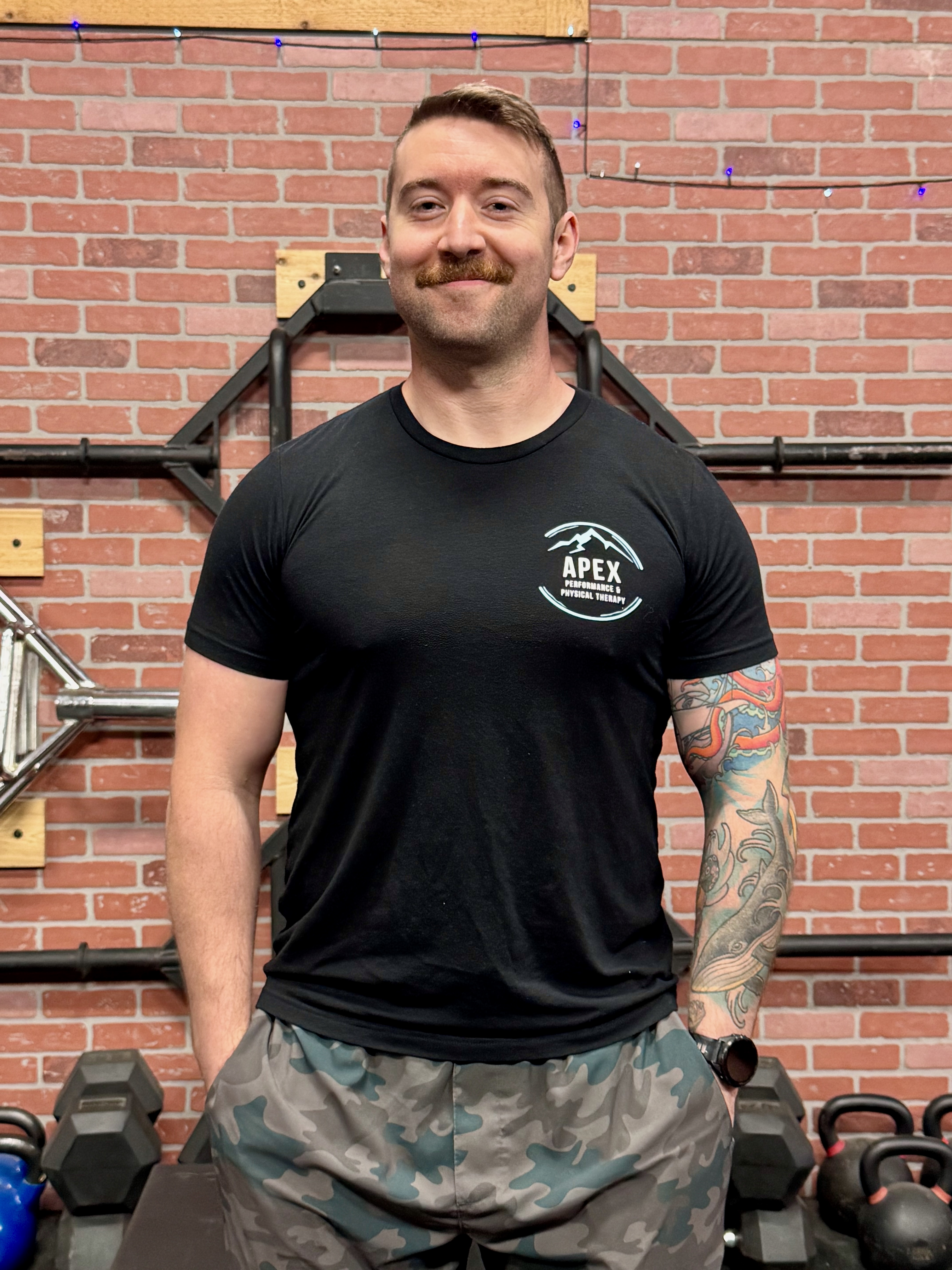
John Ribeiro, DPT, OCS
Doctor of Physical Therapy and movement-assessment specialist. Co-founder of Forge, the AI movement coach that adapts to you — he leads the coaching engine that reasons like a clinician.